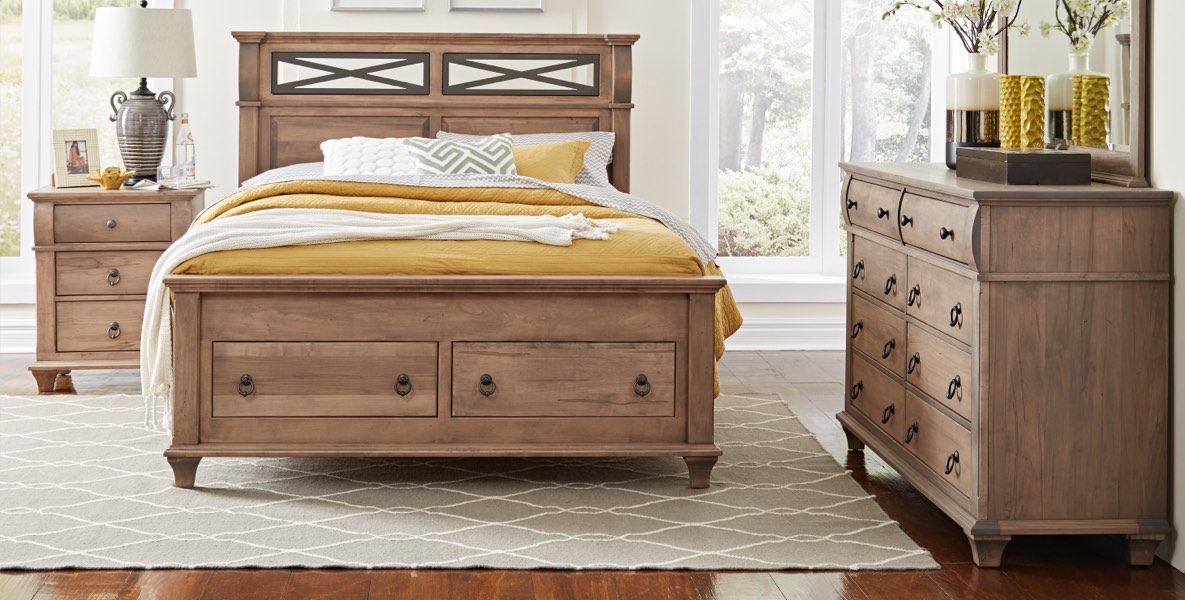

The Janka wood hardness scale is the global standard for measuring a wood species’ resistance to dings, dents, and everyday wear.
The word “hardwood” can be incredibly misleading. Most people assume it simply means the wood is tough, durable, and ready to withstand the daily activities of a busy home. But in the world of woodworking, a botanical “hardwood” (like elegant cherry) can actually be softer and more prone to dings & dents than certain “softwoods” (like rugged Douglas fir).
When you are investing in real, solid wood furniture, you aren’t just buying a look—you are investing in an heirloom. To ensure your investment withstands dropped forks, sliding laptops, and heavy daily use, you need a reliable way to measure its true durability.
That is exactly where the Janka hardness scale comes in. By understanding this industry-standard benchmark, you can confidently choose the perfect wood species for every room in your home.
The Science Behind the Janka Hardness Test
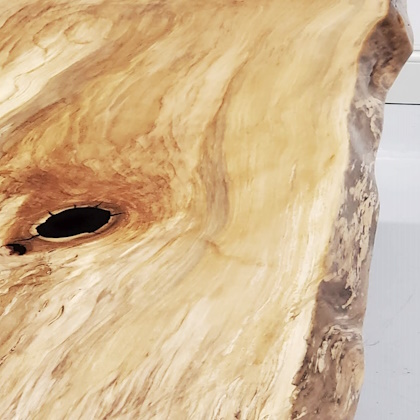
The test itself is elegantly simple but brutal. It measures the exact amount of pounds-force (lbf) required to embed a 0.444-inch (11.28 mm) steel ball precisely halfway into a smooth plank of wood.
The resulting number gives us the “Janka rating.” The higher the number, the harder the wood, and the more force it takes to leave a dent.
Crucial Factors That Impact the Test Results
A Janka score isn’t just a random number pulled from thin air; it is highly dependent on the state of the timber during testing:
- Moisture Content: To ensure fairness, standard testing requires the wood to have a 12% moisture content. Excess moisture softens wood fibers, while overly dry wood can become brittle.
- Grain Direction: The test is almost always performed on the “side grain” (the flat surface of the board) because that is the part of the wood that will actually face the wear and tear of daily life as a tabletop or floor plank.
Understanding these structural mechanics is highly useful, but keeping those natural properties intact requires proper long-term maintenance. For a complete breakdown of how to protect your investment over time, read through these proper wood furniture care guidelines.
Hardwood vs. Softwood: Dispelling the Myth
Before diving into the specific ratings, it is crucial to clear up a common point of confusion that catches many furniture shoppers off guard.
The terms “hardwood” and “softwood” are botanical classifications, not a description of how tough the lumber is:
- Hardwoods come from deciduous trees (flowering plants with broad leaves that typically drop in the autumn), such as oak, maple, cherry, hickory, and black walnut. They feature dense, complex cell structures.
- Softwoods come from coniferous trees (evergreens with needles and cones), like white pine, Douglas fir, and western red cedar.
Because these are botanical terms, some softwoods can actually score higher on the Janka scale than certain hardwoods.
For instance, a historic local builder will tell you that while white pine (380 lbf) is incredibly soft and easy to dent, an old-growth Douglas fir (660 lbf) can out-tough several true hardwoods.
However, for heirloom-grade furniture designed to span generations, premium hardwoods remain the undisputed gold standard.
Janka Hardness Scale Wood Comparison
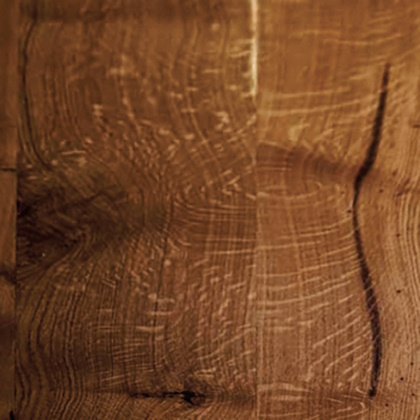
When selecting premium furniture, you will generally choose between a few time-tested hardwood species. Here is how the most popular options stack up on the Janka hardness scale wood spectrum.
| Wood Species | Janka Hardness Rating (lbf) | Character & Durability Profile |
| Hickory | 1,880 lbf | Incredibly dense, smooth, and highly scratch-resistant. |
| Maple | 1,450 lbf | Extremely hard, durable, and highly resistant to abrasion. |
| Quartersawn White Oak | 1,360 lbf | Exceptionally strong, rigid, and naturally rot-resistant. |
| Red Oak | 1,290 lbf | Traditional deep graining with excellent shock resistance. |
| Black Walnut | 1,010 lbf | Luxurious chocolate tones; mid-range hardness with superb stability. |
| Cherry | 950 lbf | Moderate hardness; satiny texture that deepens beautifully with age. |
| Pine | 380lbf | Softwood with distinctive grain; prone to dents and scratches. |
Every single one of these species brings a unique blend of strength, grain pattern, and warmth to a home. You can explore the distinct visual traits of these timbers in our comprehensive wood options guide.
How Hardness Dictates Ideal Furniture Applications
You don’t always need the absolute hardest wood on the scale for every piece of furniture. The secret is matching the Janka rating to the specific traffic and lifestyle demands of the room.
High-Traffic Zones: The Dining Room and Entryway
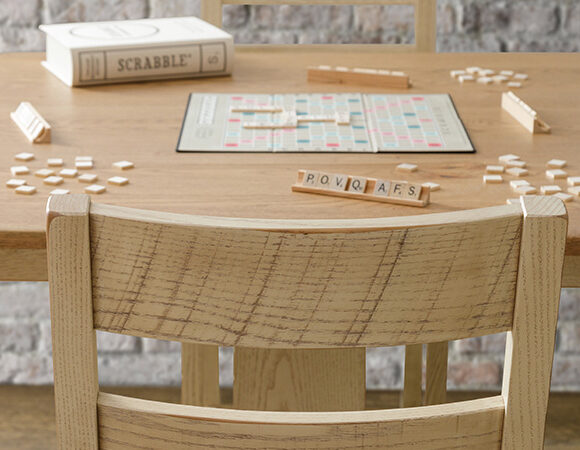
The dining room table is the ultimate workhorse of the modern home. It handles heavy dinnerware, spilled liquids, family game nights, and late-night homework sessions.
For these spaces, high-ranking hardwoods like Red Oak, Hickory, or Quartersawn White Oak are ideal. They possess the density required to repel dents from dropped utensils and hard use from children
If you are looking to outfit a space that can handle the chaotic joy of a busy family lifestyle, explore our highly durable, handcrafted dining room collections.
Medium-Traffic Zones: The Living Room
Coffee tables, media consoles, and end tables need a healthy balance of structural resilience and refined beauty. Black Walnut shines beautifully in the living room.
While its 1,010 lbf rating is lower than oak, its incredible shock resistance and dimensional stability mean it won’t warp or twist over time, handling everyday living room activity with ease.
To see how these striking grains look in a finished space, browse our beautiful solid wood living room furniture.
Lower-Traffic Zones: The Bedroom
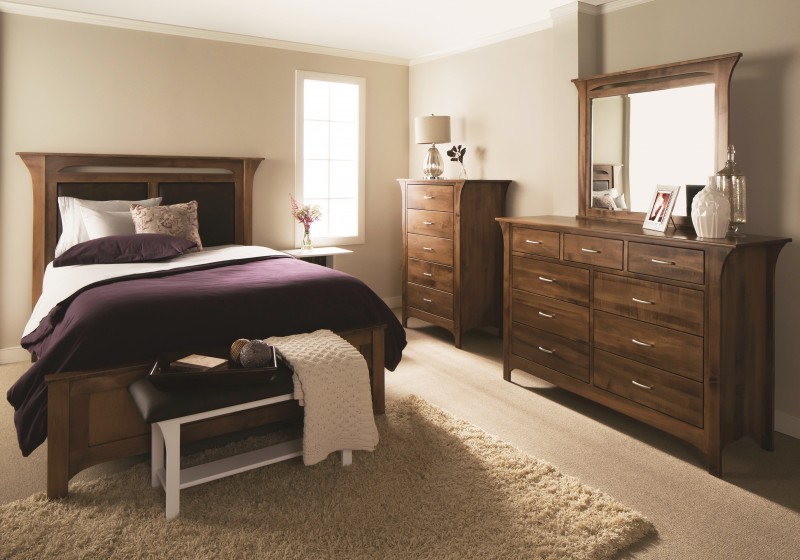
In the bedroom, impact resistance takes a back seat to warmth, comfort, and visual tranquility.
This makes moderate hardwoods like Cherry absolutely perfect for bed frames, dressers, and nightstands.
Cherry’s fine texture and tendency to develop a rich, deep patina over time create an incredibly cozy, luxurious sanctuary.
Create your own peaceful retreat by viewing our premium bedroom sets.
Beyond the Scale: Other Factors in Furniture Durability
While the Janka scale is a phenomenal baseline guide, it isn’t the only thing that determines whether a piece of furniture will last for fifty years.
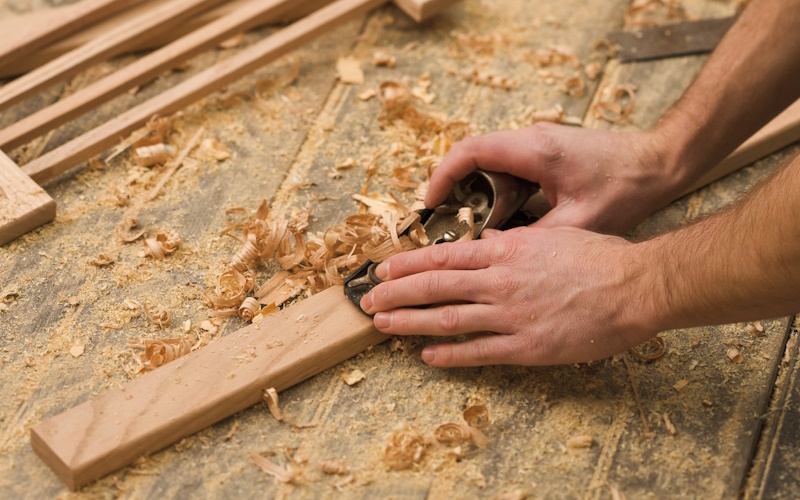
The Craftsmanship Factor: A plank of hickory with a massive Janka score will still fail if it is held together by cheap glue and staples. Structural integrity relies on heavy-duty screws, time-tested joinery techniques, like mortise-and-tenon or English dovetails, practiced by master builders who understand how solid wood naturally breathes and moves across the seasons.
Additionally, a premium, modern catalyzed varnish topcoat acts as an invisible shield.
It absorbs the micro-scuffs of daily life, ensuring that even softer woods like cherry or walnut remain perfectly protected against moisture and minor abrasions.
Bring Your Dream Furniture to Life
Understanding the Janka scale empowers you to move past temporary, mass-produced particleboard furniture and choose real wood tailored directly to your life.
Whether you need a bulletproof oak table for a bustling kitchen or an elegant cherry or walnut dresser for a master suite, the right wood species ensures your furniture grows more beautiful with each passing decade.
Design a Piece Tailored to Your Life: Don’t compromise on dimensions, storage, or wood species. Craft an heirloom that perfectly fits your home’s footprint and lifestyle with our custom-made solid wood furniture options.
Talk to Our Design Team: Have questions about matching the right wood species to your household’s needs? We are here to help guide you. Contact our design team today to discuss your vision and get expert recommendations for your next project.